Story
Lamplight

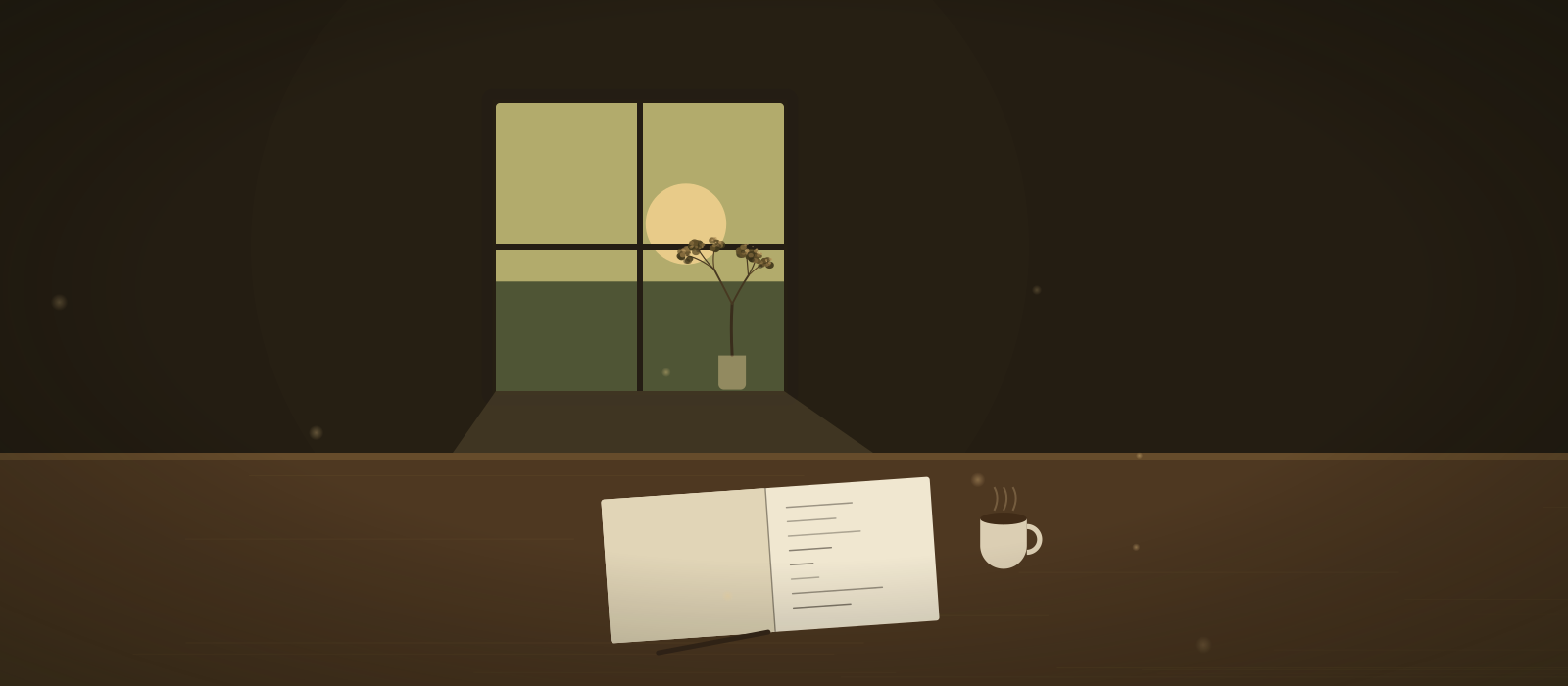
For forty-one years she left a lamp in the window.
At the start there was a reason, and the reason had a name and a boat and a habit of coming home late in weather that had no business being sailed in. The lamp was practical then. You could see it from the point, and from the point you could count the last mile.
Then there was no boat, and the reason had no more use for a light, and she kept it lit anyway.
The neighbours understood it as grief, which is a word people reach for when they want a thing to be finished. But grief was the first winter. What came after was something with no name, a habit that had outlived its animal — the way you go on setting two cups down for a while, and then one day you don’t, and the day you don’t is worse than all the days you did.
She never got to that day. She simply declined to.
Her nephew, who was fond of her and practical to a fault, once did the arithmetic of it out loud at a family dinner: the paraffin, and then the electricity, over four decades. He meant it kindly. He meant, let us take care of this for you.
She heard him out. Then she said: “And what would you have me put there instead?”
Nobody had an answer, because there isn’t one. You cannot fill a window with sensible reasoning. You can fill it with a light, and a light can be seen from a long way off, and the whole point of a light is that you do not have to know who is out there in order to leave it on.
She died in October, at home, in the good chair.
Her nephew stayed the first night alone in the house, and at about six, without deciding to, he got up and switched on the lamp in the window, and sat back down, and was very quiet for a long time.
It is still going. I can see it from the point. From the point you can count the last mile.